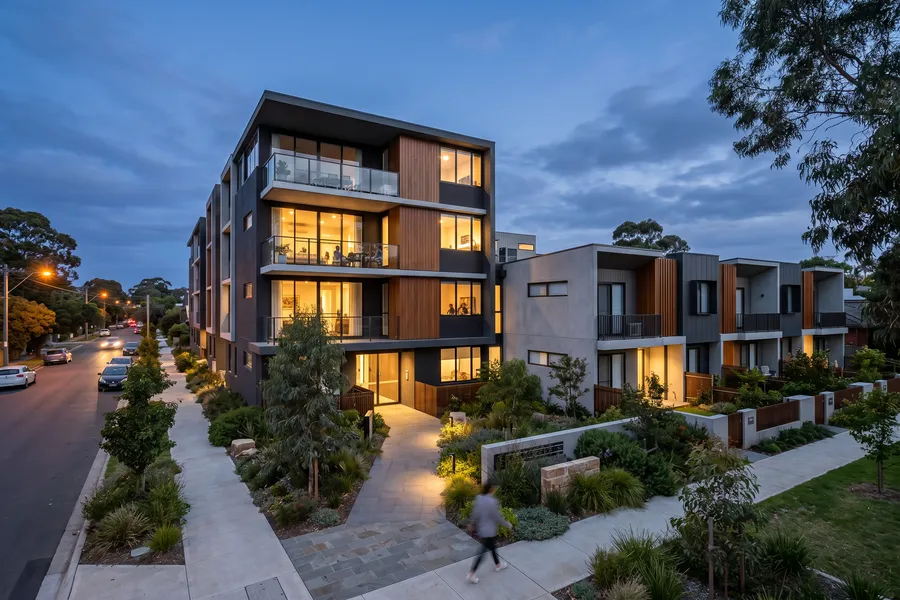
Mezzanine finance is a subordinated layer of debt that sits behind the senior lender and ahead of equity in the capital stack. It lifts total gearing on a development so you commit less of your own capital, which can improve return on equity when the project performs.
A development capital stack typically runs from senior debt at the base, through mezzanine, then preferred equity, to ordinary equity at the top. Mezzanine ranks behind the senior debt for security and repayment, usually by way of a second mortgage or a subordination deed, and ahead of all equity. Because it sits in a riskier position than the senior loan, it is priced higher, but it lets the total facility reach a loan to cost the senior lender alone would not.
Mezzanine pricing reflects its subordinated position. The drivers are the combined loan to cost across senior and mezzanine, the headroom in the feasibility (the development margin and forecast profit), the security and intercreditor terms with the senior lender, and the exit. It usually carries a higher cost than senior debt, sometimes with a profit-share or exit component, and depends on the senior lender agreeing to the subordination. We do not quote a standard rate or leverage cap; both are deal-specific.
Mezzanine is structured as subordinated debt, usually with a fixed cost and a second-ranking security. Preferred equity is an equity investment that ranks ahead of the developer's ordinary equity but behind all debt, and is rewarded with a preferred return rather than interest. Mezzanine tends to be cheaper and harder-edged on security; preferred equity sits lower in the stack, carries more risk and is priced accordingly. The right layer depends on how much leverage the senior lender allows and how the developer wants to share risk and return.
Mezzanine costs more than senior debt, so the question is never the rate in isolation. It is whether the extra leverage lifts your return on equity and lets your capital do more across the pipeline. On a deal that supports it, that trade can be well worth making, though it depends on the project performing.
It is subordinated debt. It sits behind the senior loan and ahead of equity, usually secured by a second mortgage or a subordination deed, and is repaid with interest rather than a share of ownership.
Yes. Mezzanine relies on the senior lender consenting to the subordination and on agreed intercreditor terms. Arranging both layers together makes that far smoother.
It varies with the feasibility, the margin and the senior position, so there is no fixed cap. The aim is to reach a loan to cost that improves return on equity without over-gearing the project.
Because it ranks behind the senior loan and carries more risk if the project underperforms. The higher cost is the trade for higher leverage and less equity committed.
Tell us about the project, the numbers, and the timeline. We will give you an honest read on whether we can fund it and what a suitable structure could look like. Email loans@bottomlinefinance.com.au or send the form.
Talk to us